
How to Create a Japandi-Style Living Room: A Complete Guide to Building a Calm, Natural Living Space
Imagine a space where warm light filters through a linen lampshade, where the smooth touch of an oak coffee table is within arm's reach, and where the fine woven texture of a jute rug is beneath your feet. This is not a distant design magazine cover but a real scene that Japandi style is recreating in homes worldwide. According to home trend analytics firm Predict, Japandi-related searches have grown 87% over the past two years (Predict, 2026), making it one of the most sought-after interior design styles of the post-pandemic era.
Japandi is a fusion of Japanese and Scandinavian design. It inherits the pragmatism of Scandinavian design and the wabi-sabi spirit of Japanese aesthetics, ultimately expressed in a single phrase: quiet warmth. And building such a space does not require a dramatic renovation. It starts with choosing the right furniture, one piece at a time.
Key Takeaways- Global Japandi home searches grew 87% in two years, making it the most-watched interior style trend of 2026 (Predict, 2026).
- The four core elements of a Japandi living room: solid wood furniture, natural textiles, warm layered lighting, and natural fiber flooring.
- Start with one core furniture piece and build the space gradually rather than filling every corner at once.
- Research shows that living rooms using warm color temperatures (2700K-3000K) see a 34% increase in occupants' relaxation scores (Lighting Research Center, 2025).
Why Is Solid Wood Furniture the First Step in Japandi?
According to the 2025 Interior Design Trends Report, 78% of interior designers consider solid wood the most important material element in Japandi style (Interior Design Society, 2025). The reason is simple: wood is the only material that becomes more beautiful with time. Scratches, sun exposure, and touch all add character rather than age it.
In a Japandi living room, furniture plays the role of a spatial anchor. Choosing low-profile solid wood furniture not only aligns with the Japanese tradition of floor-level living but also lowers the sightline, making the space feel larger visually.
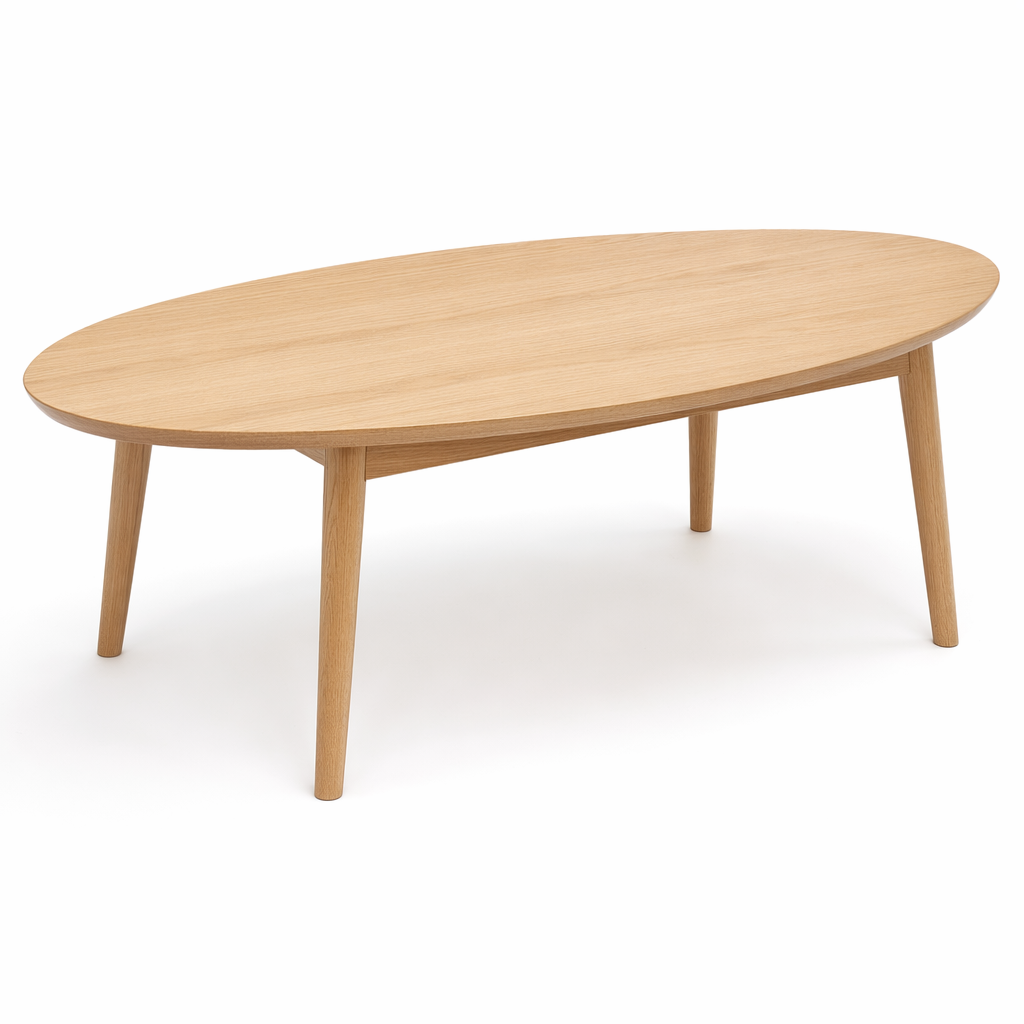
White oak is one of the most commonly used woods in Japandi. Its light tone reflects natural light and makes a space feel airy. An Oak Oval Coffee Table (110cm x 60cm) fits perfectly in most living room seating areas. The oval shape is softer than right angles, aligning with Japandi's pursuit of harmony and roundness.
How Do Natural Textiles Create Visual Layers?
A home design feature in The Guardian noted that Japandi spaces use an average of 4-6 different natural materials to build visual layers (The Guardian, 2025). Textiles are the most critical element in this equation, as they determine whether a space feels "cold" or "warm."
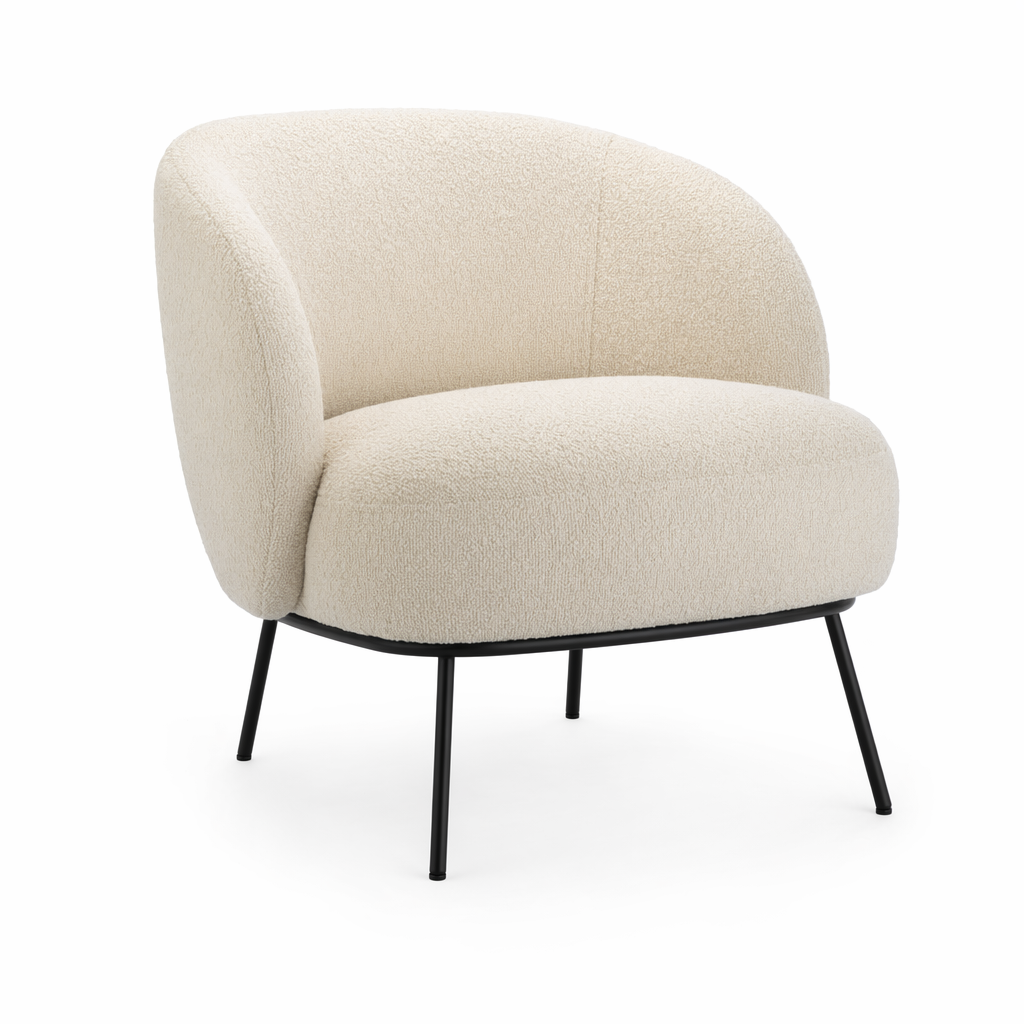
Boucle fabric has become a signature material in Japandi style in recent years. Its coarse woven texture creates a perfect tactile contrast with smooth solid wood surfaces. A cream-colored Cream Boucle Accent Chair placed in a corner of the living room is both a functional seat and an independent visual sculpture.
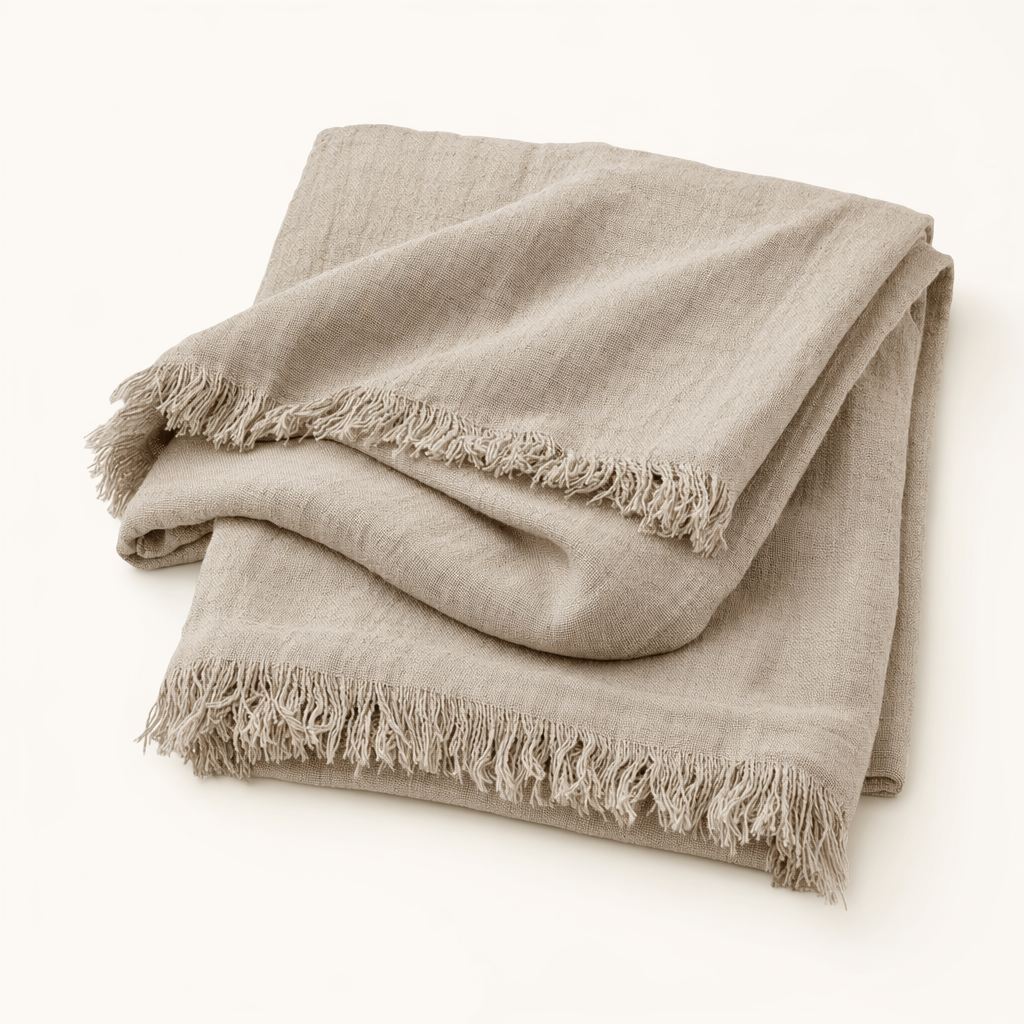
For textile layering, linen is irreplaceable in Japandi. Linen has a natural wrinkle texture that does not strive for crisp perfection. This "imperfect perfection" is the core of wabi-sabi aesthetics. A Natural Linen Throw Blanket (130cm x 170cm) casually draped over the arm of a chair instantly softens the room's rigidity.
Why Is Warm Layered Lighting So Important?
A 2025 study by the Lighting Research Center showed that switching lighting from cool white (5000K) to warm (2700K) in the same space significantly reduced subjects' heart rates and skin conductance, with relaxation scores increasing by 34% (Lighting Research Center, Rensselaer, 2025). For Japandi style, lighting is not a tool to "illuminate a space" but a means to "create mood."
A Japandi living room needs at least three layers of lighting: ambient light (main source), task light (reading lamp), and accent light (decorative source). Among these, a floor lamp is the core piece for creating atmosphere.
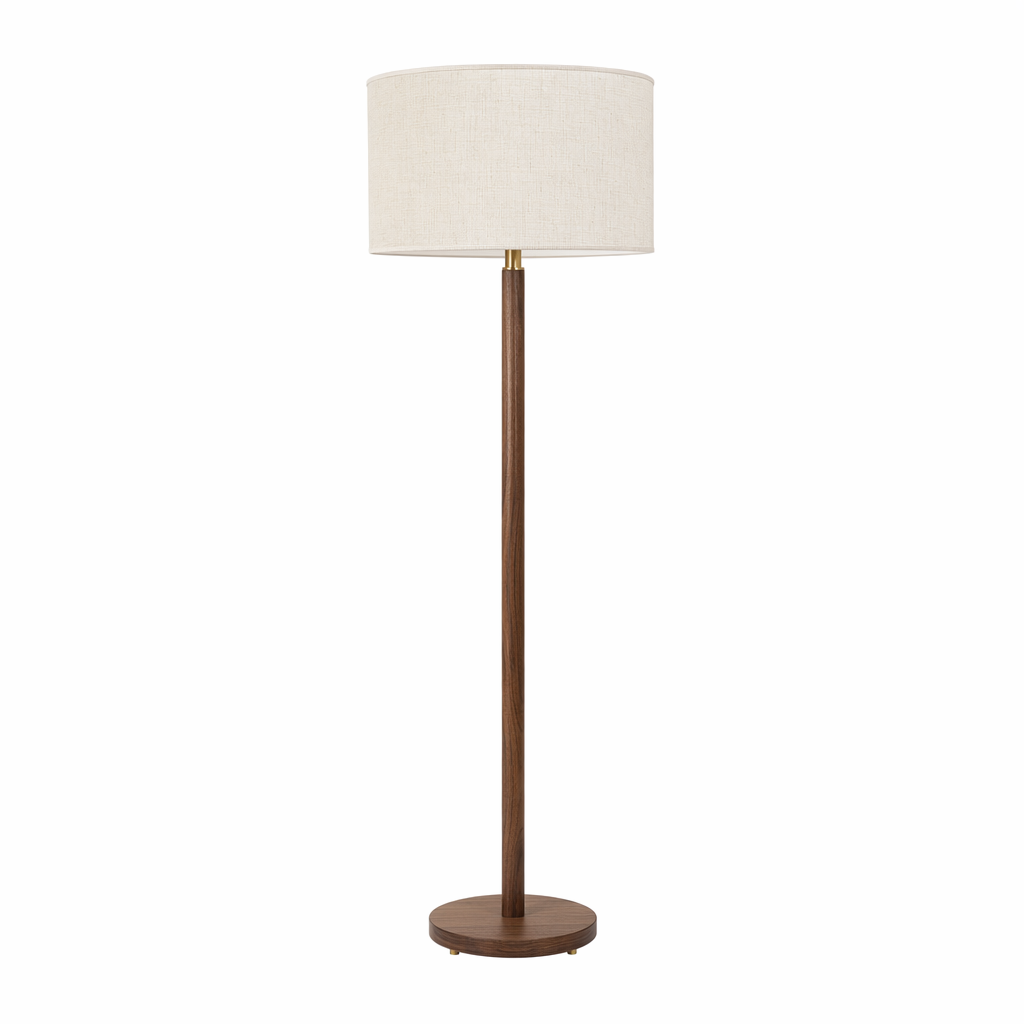
A Linen Shade Floor Lamp (155cm tall, linen shade, walnut pole) is an excellent choice for a Japandi living room. Its linen shade softens the light as it passes through, and paired with a 2700K LED bulb, the lamp creates a warm glow zone of about 2 meters in diameter, perfectly covering an armchair and coffee table area.
For wall lighting, the Matte Black Linen Shade Wall Sconce (black matte steel arm, linen shade, 28cm wall projection) is the perfect complement. One sconce paired with one floor lamp achieves the signature "soft layered glow" effect of Japandi.
For the dining area, consider the Rattan Pendant Light (45cm diameter, hand-woven rattan). It casts dappled shadows on the ceiling, adding natural artisanal texture to the space.
| Lighting Type | Recommended Piece | Color Temperature |
|---|---|---|
| Ambient light | Rattan Pendant Light | 2700K |
| Reading / task light | Linen Shade Floor Lamp | 2700-3000K |
| Wall accent light | Matte Black Wall Sconce | 2700K |
How Do Flooring and Rugs Affect the Overall Atmosphere?
Japandi style emphasizes a sense of being "grounded." This is not just a philosophical concept but a physical experience. Floor materials occupy at least 30% of a space's visual and tactile area, and their choice directly affects the entire room's tone.
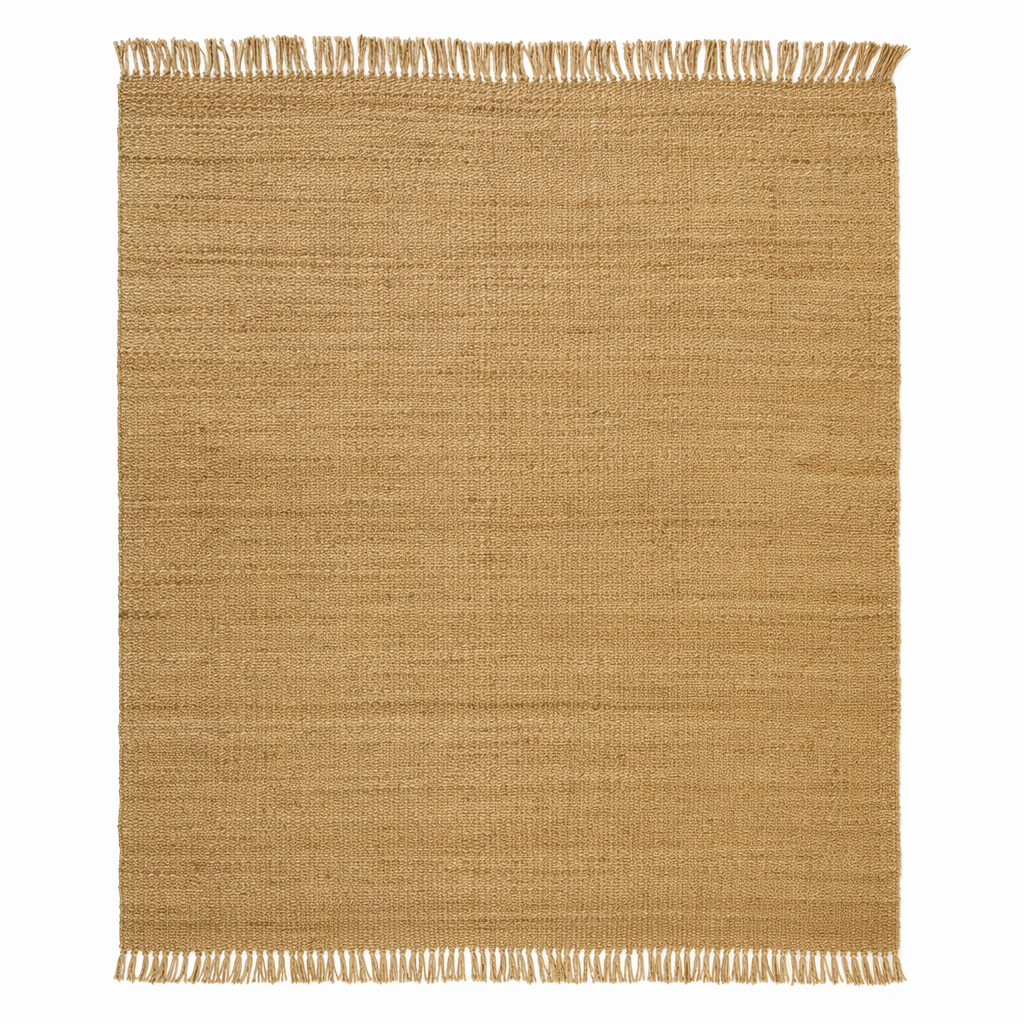
Jute is currently the most popular flooring material in Japandi style. It is more sustainable than wool (jute's growth cycle is only 4-5 months), more durable than cotton, and has a natural warm brown tone. In a 2025 sustainable home materials survey, jute was named "one of the most sustainable natural fibers" (Sustainable Home Magazine, 2025).
A Natural Jute Area Rug (160x230cm or 200x290cm) laid flat under the coffee table provides a natural textural base for the entire living room. Choosing flat-weave over high-pile construction aligns better with Japandi's minimalist aesthetic and makes daily cleaning easier.
Why Is "Less Is More" the Rule for Decor Details?
The Japandi decorating principle is: every object has its place, and every placed object has its meaning. This does not mean the space must be empty. It emphasizes restraint in selection.
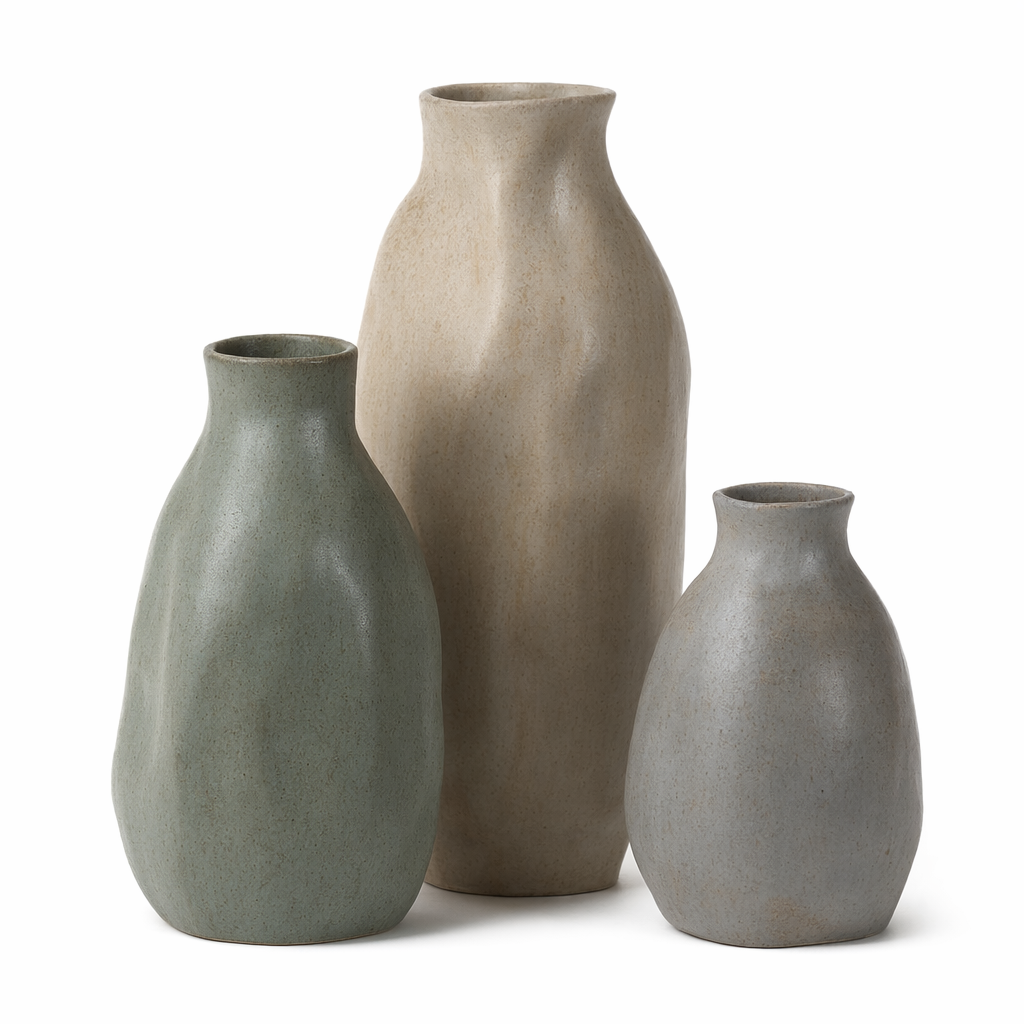
A set of Handthrown Ceramic Vase Set (three heights: 12cm, 18cm, 24cm; sand, sage, warm grey) placed on a walnut sideboard is the most classic image of Japandi decor. Every subtle irregularity in the handmade ceramics, the slight variation in glaze thickness, the gentle curve of an edge, embodies the spirit of wabi-sabi.
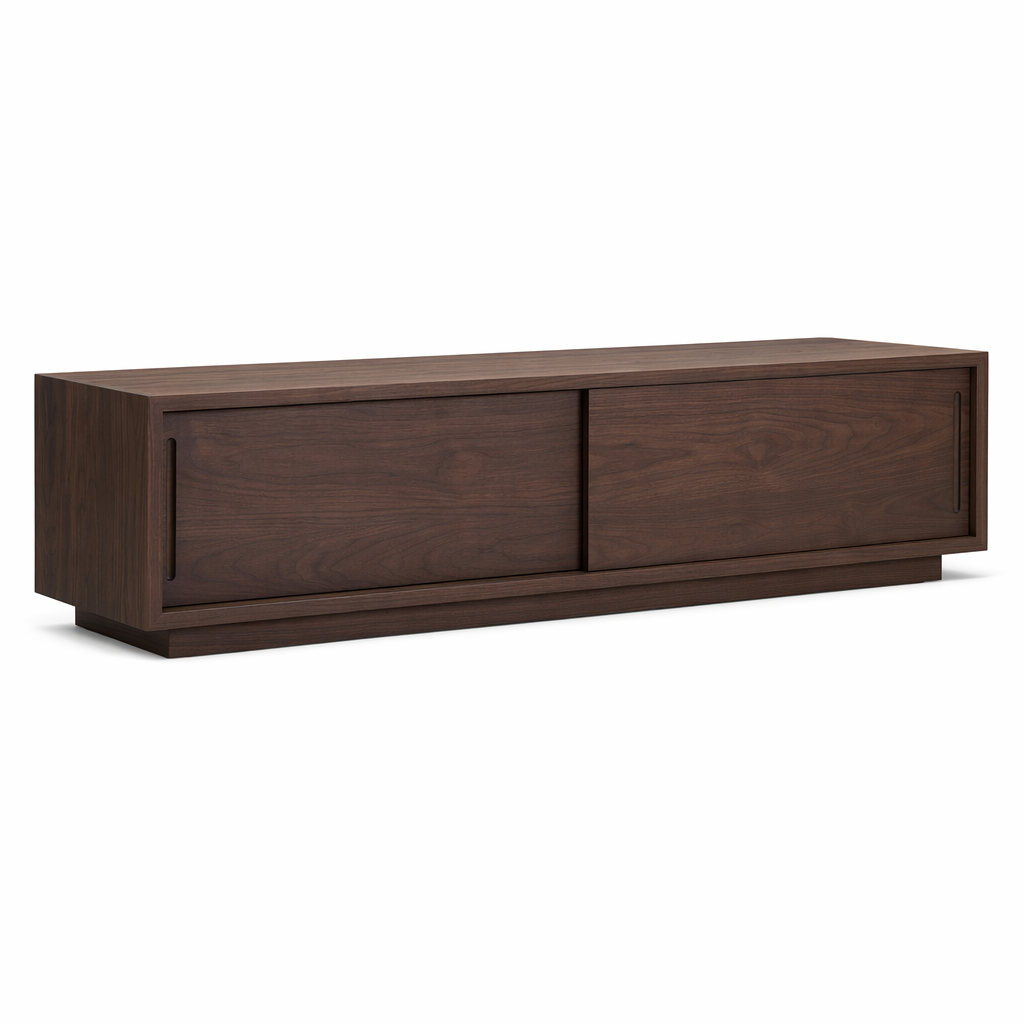
Arrange vases, books, and a small ceramic object in odd numbers (3 or 5 items) on the Walnut Low Sideboard (160cm wide, walnut, magnetic sliding doors) to form a visual "triangle composition." This is the golden rule in design that lets the eye flow naturally. Place a Luxxi Home Drum Side Table (35cm diameter x 45cm height, ivory faux travertine) nearby. It serves as both a practical side table and an independent decorative sculpture.
How Do You Create a Meditation Corner at Home?
Japandi style is concerned not only with how a space "looks" but how it makes you "feel." According to the 2025 Wellness Design Trends report, 68% of respondents reported noticeable improvements in daily stress levels after setting up a dedicated relaxation corner at home (Wellness Design, 2025). This is the core distinction between Japandi and other styles: it is not just visual aesthetics but a lifestyle choice.
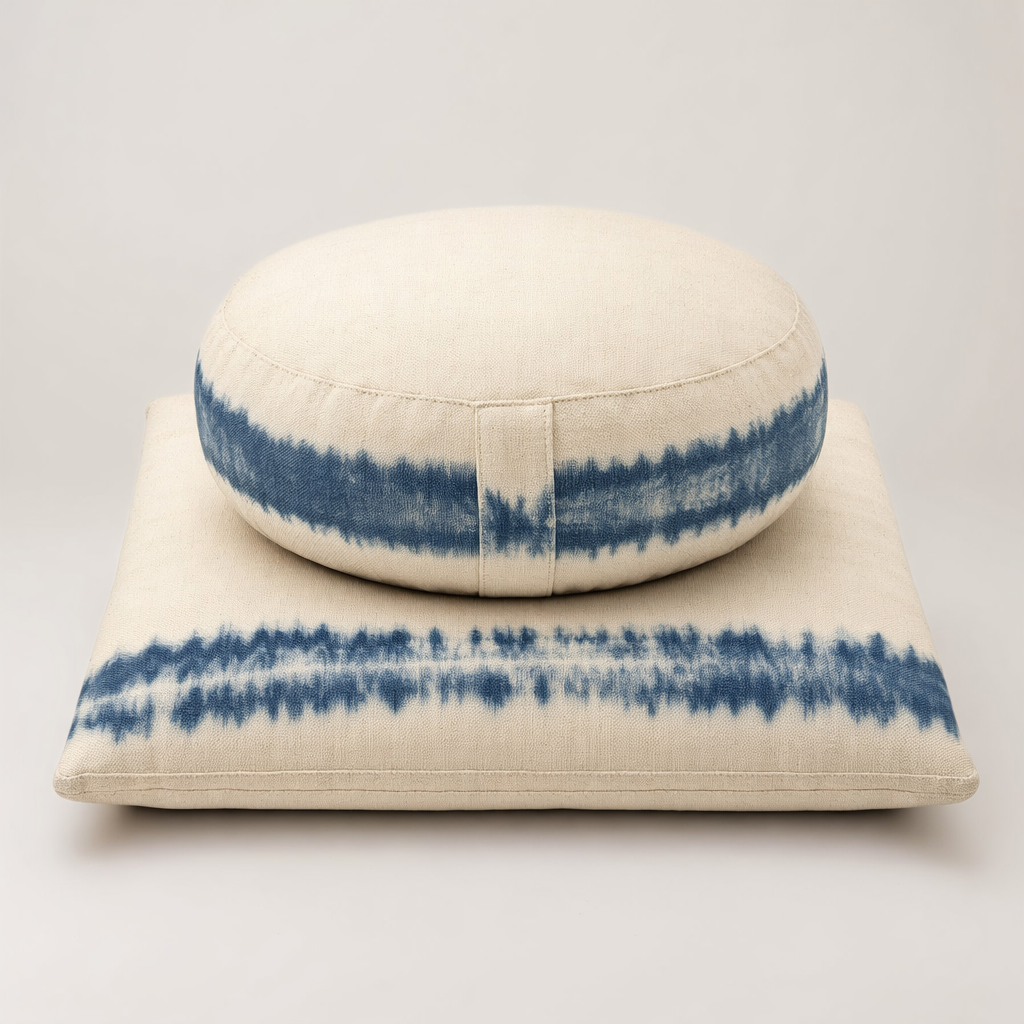
You do not need a separate room. A corner by the living room window, a jute rug, a Zen Meditation Cushion Set (round zafu cushion + square zabuton mat, kapok plant fiber fill, indigo accent band), and a warm-glow floor lamp form a complete meditation corner. Morning or evening, sit here for 10 minutes and let your body and space quiet down together.
Ready to start? Begin with one core piece and build your Japandi living room.
Explore the full StoreClaw Home collectionFrequently Asked Questions
Minimalism emphasizes "less is more," while Japandi adds a dimension of warmth on top of that. Japandi pursues not only visual simplicity but also the tactile quality of materials, the use of natural light, and the sense of tranquility a space brings. It blends Scandinavian practicality with Japanese wabi-sabi aesthetics. According to a 2025 Interior Design Society survey, 68% of designers consider "warmth" the most defining characteristic that sets Japandi apart from minimalism.
Start with a core furniture piece: a solid wood coffee table or a warm-glow floor lamp can set the tone. According to home decor industry data, 68% of Japandi enthusiasts begin by upgrading lighting and rugs, as these two elements most dramatically transform a space's atmosphere (Architectural Digest, 2025). Add more pieces like a boucle accent chair or handmade ceramic vases over time.
Yes, but with restraint. Japandi's foundation is a neutral palette of off-white, oatmeal, warm grey, and light brown. On this base, you can add small amounts of deeper accent colors like forest green, indigo, or charcoal black. Research shows that an 80% neutral to 20% accent color ratio maintains spatial tranquility without feeling monotonous (Houzz, 2025).
Absolutely. Japandi is itself a fusion of Scandinavian and Japanese aesthetics. You can use light oak (Scandinavian) and walnut (Japanese) in the same space, paired with linen textiles and jute rugs. The key is keeping materials natural, lines clean, and color tones unified. StoreClaw Home's product line is designed based on this fusion logic.
Conclusion: Start With One Piece of Furniture
Building a Japandi-style living room does not require doing everything at once. In fact, the best Japandi spaces "grow" over time. Each piece of furniture is chosen after careful consideration, and each decoration has its own story.
- Start with one core solid wood piece (coffee table or sideboard) to set the spatial tone
- Choose 2-3 natural materials (oak, linen, jute, ceramic) and keep the material count controlled
- Use warm layered lighting (2700K-3000K) to create atmosphere
- Lay a natural fiber rug to "ground" the space
- Follow the "triangle composition" principle for decor, with no more than 3-5 items per group
- Reserve a corner for yourself: meditation, reading, or simply daydreaming
Every choice is a vote for the life you want to live.
References
1. Predict - "Global Interior Design Trend Report 2026", retrieved 2026-08-10, https://www.predict.com
2. Lighting Research Center, Rensselaer Polytechnic Institute - "Color Temperature and Relaxation Response Study", 2025, https://www.lrc.rpi.edu
3. Interior Design Society - "2025 Material Trends in Japandi Design", retrieved 2026-08-10, https://www.interiordesignsociety.org
4. The Guardian - "Japandi: The Interior Trend That Keeps Growing", 2025, https://www.theguardian.com
5. Sustainable Home Magazine - "Natural Fibers in Modern Design", 2025, https://www.sustainablehomemag.com
6. Wellness Design - "2025 Wellness Design Trends Report", retrieved 2026-08-10, https://www.wellnessdesign.com
7. Architectural Digest - "Japandi Style on a Budget", 2025, https://www.architecturaldigest.com
8. Houzz - "Color in Japandi Interiors: A 2025 Survey", retrieved 2026-08-10, https://www.houzz.com
9. StoreClaw Home - Product data and customer feedback, 2026, https://storeclaw.shopgrow.shop